A bathroom shelf full of skincare products can make daily care more confusing, especially when your skin reacts easily. You may find yourself buying something new for every concern, then struggling to identify which product caused the latest discomfort.
A useful starting point is a manageable routine built around cleansing, moisturizing, and sun protection. The aim is comfortable skin and consistent care, with spending focused on products you actually use. You do not need to buy an entire matching range or chase every new ingredient to establish those basics.
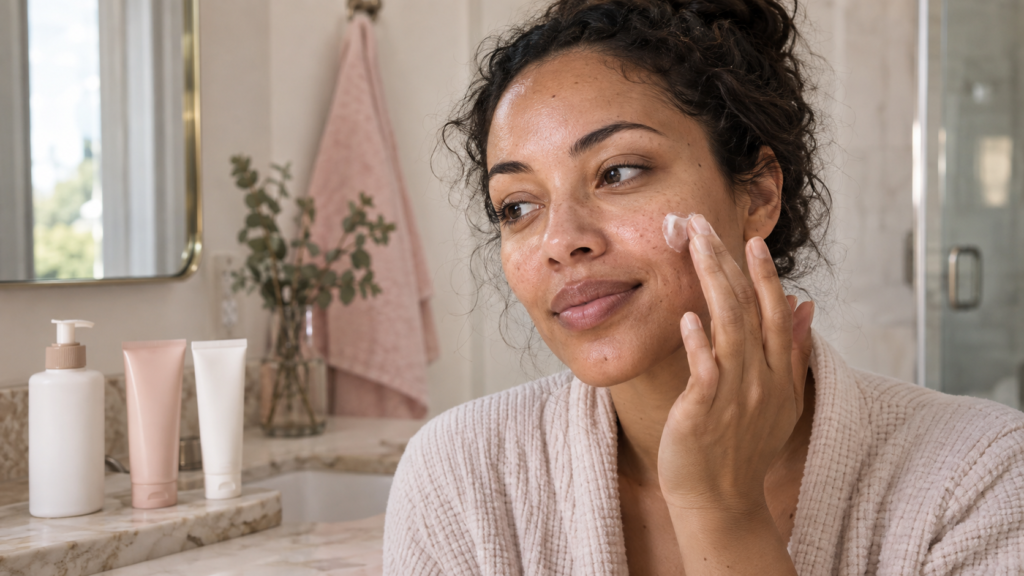
Start by Understanding Your Skin’s Current Needs
“Sensitive skin” describes an experience, such as stinging or discomfort, rather than telling you exactly what is causing it. Dryness, a reaction to a product, and a diagnosed skin condition are not automatically the same problem.
Before shopping, note what you are experiencing and when it happens. Does discomfort start after washing? Did it appear after you introduced a new product? Is the problem occasional or persistent?
Use these notes to describe the issue clearly, not to diagnose yourself. The American Academy of Dermatology’s dry skin guidance advises seeing a dermatologist when dryness persists or products cause burning, stinging, or irritation.
Build Your Routine Around Three Essentials
The AAD’s budget skincare advice supports a simple approach based on cleansing, moisturizing, and protecting skin from the sun. Expensive packaging does not establish that a product will work better for you.
Think in terms of jobs rather than bottles. Your cleanser removes everyday buildup, your moisturizer helps manage dryness, and your sunscreen contributes to sun protection. A toner, facial mist, mask, or separate eye cream is not automatically required to make that routine complete.
Start by checking what you already own. A suitable product you tolerate does not need replacing simply because another brand is trending.
Choose a Gentle Cleanser and Use It Gently
Look for a mild, non-abrasive facial cleanser. The washing technique matters too: use lukewarm water, apply with your fingertips, rinse, and gently pat dry. Avoid scrubbing with rough cloths or brushes. The AAD’s face-washing guide recommends limiting washing to twice daily and after sweating.
Give the cleanser a specific place in your routine instead of repeatedly washing whenever your face feels imperfect. More cleansing is not automatically more effective care.
If your current product consistently leaves your skin uncomfortable, write down its name and ingredients. That record is more useful during a professional consultation than a general description such as “the blue bottle.”
Select a Moisturizer You Can Comfortably Keep Using
For dry, sensitive skin, fragrance-free products are a sensible place to start. “Unscented” can mean ingredients have been added to hide a smell, so it is not necessarily equivalent to fragrance-free. The AAD also notes that creams and ointments can be more helpful than lotions for very dry skin. Dry skin product guidance.
Texture still matters in daily life. A product that feels unpleasant may sit unused, regardless of its reputation. Look for a format you are willing to apply, and avoid buying a large backup supply before you know it suits you.
Follow the product directions. If you already have a prescribed skincare plan, ask the clinician how your moisturizer should fit around it.
Make Sunscreen Part of Your Morning Plan
Choose a broad-spectrum, water-resistant sunscreen with SPF 30 or higher. Apply it to exposed skin before going outdoors and follow the label for quantity and timing. When outside, reapply approximately every two hours and after swimming or sweating, as directed. Combine sunscreen with shade and protective clothing. AAD sunscreen guidance.
For sensitive skin, a mineral sunscreen containing zinc oxide or titanium dioxide may be an option to discuss or try. No label guarantees that every person will tolerate a formula.
Do not save money by deliberately stretching a bottle through inadequate application. Instead, compare suitable products by size and price, and choose one you can afford to use properly.
Keep the Order Easy to Remember
For a basic routine without prescribed treatments, the sequence is straightforward:
| Time | Routine |
|---|---|
| Morning | Gentle cleansing, moisturizer as needed, then sunscreen before outdoor exposure |
| Evening | Gentle cleansing to remove the day’s buildup, followed by moisturizer |
| During outdoor time | Reapply sunscreen according to the label and conditions |
The AAD’s product-order guidance places cleansing before treatments and moisturizing or sunscreen. If you use medication, follow its instructions and your clinician’s advice instead of changing its timing to match a generic routine.
Put the products where you normally get ready. A short routine that fits your morning and evening is easier to maintain than one requiring a new schedule.
Compare Cost per Amount and Avoid Unnecessary Duplicates
Price comparisons become clearer when you look at package size. Suppose a cleanser costs $12 for 200 milliliters while another costs $9 for 100 milliliters. The first costs $6 per 100 milliliters; the second costs $9. These are hypothetical prices, not current product offers.
That calculation only helps if the larger product suits you and will be used. A smaller first purchase can be more economical when you are unsure about a formula. Buying a large bottle that you abandon after two uses is not a saving.
Set your budget around replacing the essentials. Before adding a serum, ask which specific concern it addresses, whether you already own something for that purpose, and whether professional advice would be more useful than another purchase.
Change One Part of the Routine at a Time
As a practical tracking habit, avoid replacing your cleanser, moisturizer, and sunscreen on the same day. If something feels uncomfortable afterward, you will have less information about which change mattered.
Keep a simple note with the product name, the date you started using it, and any symptoms. A dated photograph taken in similar lighting can help you explain changes to a clinician, though it cannot establish a diagnosis.
Follow any testing instructions on the product label. Do not keep using a product through burning or a worsening rash because a social media post calls it “working.” Seek advice when symptoms persist or you are unsure what caused them.
Do Not Make Every Visible Feature a Treatment Project
It is easy to start a basic routine and then add several products for texture, occasional blemishes, or uneven appearance. Decide which concern actually bothers you most before expanding the routine.
The AAD’s guidance on building a routine in your 20s describes selecting products for a primary concern rather than treating skincare as a competition to use more ingredients. Individual needs still differ at every age.
Make a short list of questions before a dermatology appointment. Ask what needs treatment, which steps are optional, and whether a lower-cost product could serve the same purpose in your plan. A clear answer can prevent repeated spending on unsuitable products.
Frequently Asked Questions
Do I need separate products from the same brand?
There is no practical need to match packaging for its own sake. Focus on each product’s purpose, directions, and how it fits your routine. Check compatibility with prescribed treatments when relevant.
Can an affordable moisturizer be a reasonable choice?
Yes. Price alone does not establish suitability. A product that fits your needs and is comfortable to use can be a better purchase than an expensive alternative bought mainly for its reputation.
Should I add an exfoliating product immediately?
It is not an essential starting step in the simple routine described here. If your skin is already uncomfortable, discuss that problem before adding another product intended to change its texture.
Keep the Routine Useful and Sustainable
Start with a gentle cleanser, a suitable moisturizer, and dependable sun protection. Buy for a clear purpose, compare costs sensibly, and keep track of changes. When irritation continues, professional advice is more useful than repeatedly expanding your shopping list.
This article offers general skincare education and is not a diagnosis or treatment plan. Consult a qualified healthcare professional for persistent irritation or a suspected skin condition.